What the earliest historical evidence reveals about Islam after the Prophet
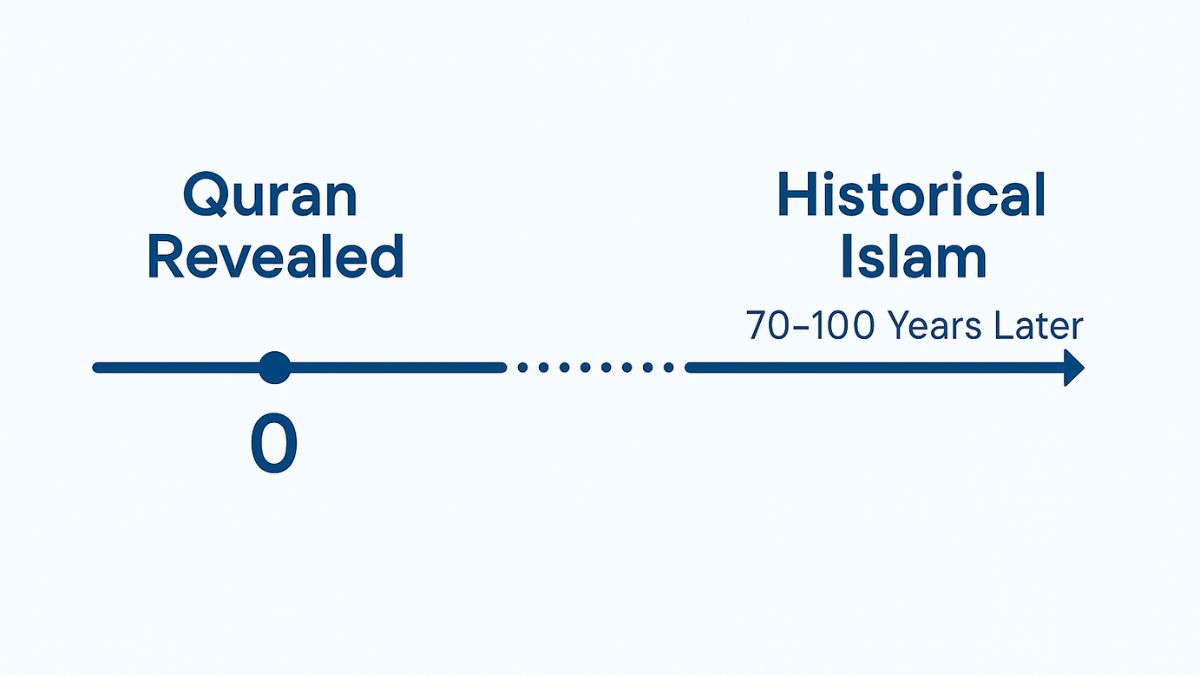
Modern research by scholars such as Dr. Fred Donner shows that the earliest community of believers did not resemble the later system known today as Islam. The first generations were a simple community of monotheists whose faith centered on worshiping God alone and living righteously. The complex religious structure that later became “Islam” developed 70–100 years after the Prophet’s death.
A Community of Believers, Not a New Religion
According to Dr. Donner’s research, the early community called itself “the Believers’ movement,” which included Arabs, Jews, Christians, and other monotheists. They were united by belief in one God, righteousness, moral conduct, and accountability in the Hereafter—not by rituals, sects, or legal systems.
Ritual and Legal Systems Emerged Later
The legal schools, massive hadith collections, and ritual systems that define Islam today arose decades after the Prophet. Political expansion, empire-building, and scholarly debates shaped these traditions between 70 and 100 years after his death. Much of the later structure was influenced by politics and cultural practices rather than by the original community.
The Quran Was the Sole Authority
For the earliest believers, the Quran alone was the guiding scripture. There were no hadith collections, no legal schools, and no external authorities. The Quran served as their only source of moral and spiritual guidance, consistent with its message of completeness and clarity.
The Shift Toward a New Identity
As empires expanded, rulers required religious uniformity, legal systems, and political justification. This led to the creation of sects, doctrines, legal rulings, and large volumes of hadith. A simple monotheistic community gradually transformed into a structured religious system far from its original Abrahamic roots.
Why This Matters Today
Understanding this history allows us to distinguish between God’s simple, universal religion and later human-made structures. The Quran emphasizes clarity, simplicity, and devotion to God alone, free from sectarianism and cultural distortions. Recognizing the historical reality helps modern believers return to the original path of Abrahamic submission.
Conclusion
The historical evidence shows that the earliest believers practiced a simple, God-centered faith—not the complex system known today as Islam. Returning to the Quran and pure monotheism restores the essence of submission: devotion to God, righteousness, sincerity, and preparation for the Hereafter.